The Sunday People, Sun, Feb 02, 1941 ·Page 5
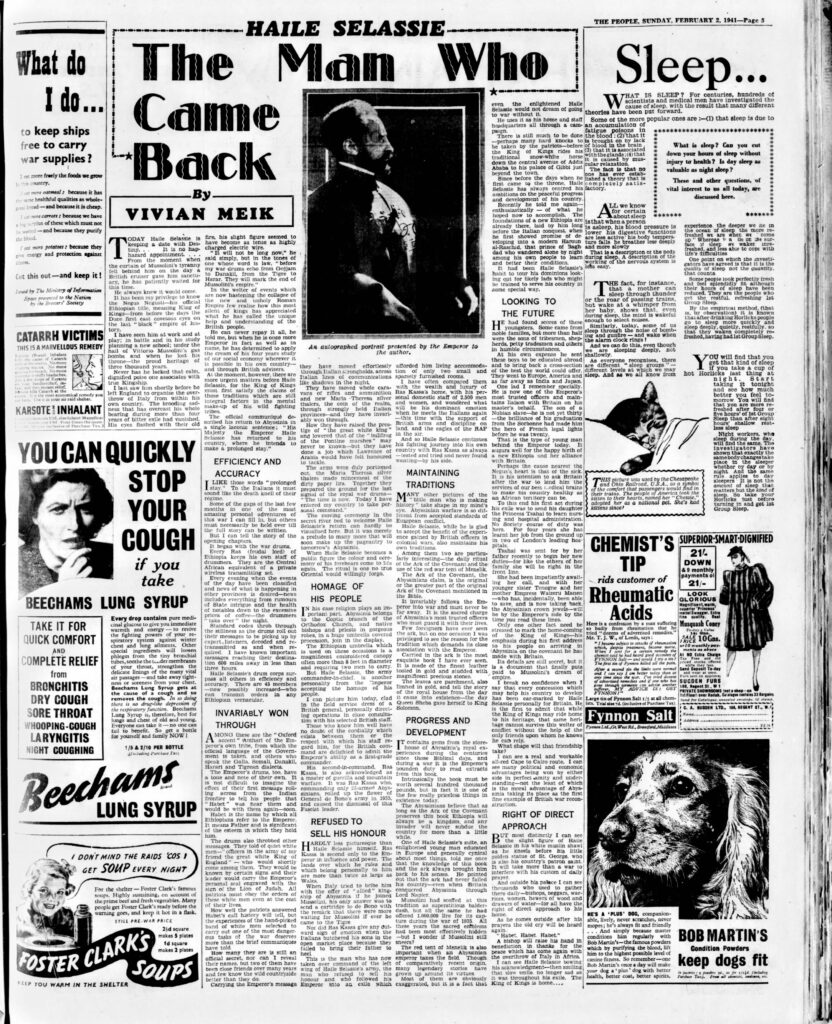
T ODAY Haile Selassie is keeping a date with Destiny… It is no hap-hazard appointment…
From the moment when the curtain of Mussolini’s tyranny fell behind him on the day a British cruiser gave him sanctuary, he has patiently waited for this time.
He always knew it would come.
It has been my privilege to know the Negus Negusti – his official Ethiopian title, meaning King of Kings – from before the days the Duce first cast covetous eyes on the last “black” empire of history.
I have seen him at work and at play; in battle and in his study planning a new school; under the hail of Vittorio Mussolini’s gas bombs and when he lost his throne-the proud heritage of three thousand years.
Never has he lacked that calm, dignified poise one associates with true Kingship.
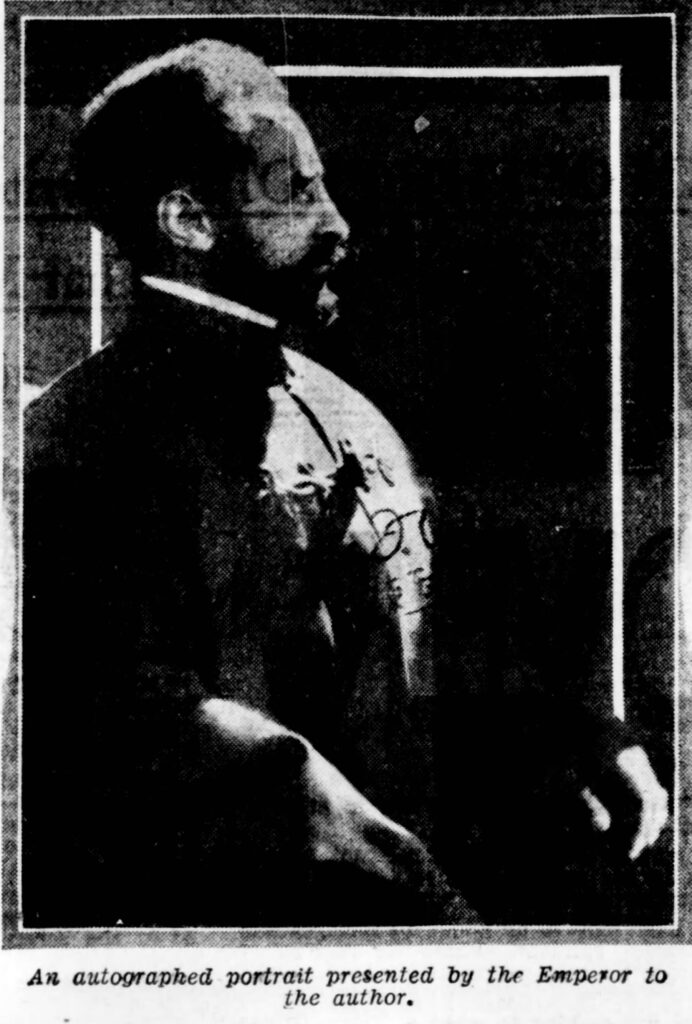
I last saw him shortly before he left England to organise the overthrow of Italy from within his own country. The brooding sadness that has overcast his whole bearing during more than four years of bitter exile had vanished. His eyes flashed with their old fire, his slight figure seemed to have become as tense as highly electric wire.
“It will not be long now,” he said simply, but in the tones of one whose word is law, “before my war drums echo from Gojjam to Danakil, from the Tigre to Harar. They will mark the end of Mussolini’s empire.”
In the welter of events which are now hastening the collapse of the new and unholy Roman Empire few realise how this most silent of kings has appreciated what he has called the unique help and understanding of the British people.
He can never repay it all, he told me, but when he is once more Emperor fact as well as in name, he has determined to apply the cream of his four years study of our social economy wherever it is possible in his own country – and through British advisers.
At the moment, however, there are more urgent matters before Haile Selassie, for the King of Kings must first satisfy the claims of those traditions which are still integral factors in the mental make-up of his wild fighting tribes.
The official communiqué described his return to Abyssinia in a single laconic sentence: “His Majesty the Emperor Haile Selassie has returned to his country, where he intends to make a prolonged stay.”
EFFICIENCY AND ACCURACY
I LIKE those words “prolonged stay. To the Italians it must sound like the death knell of their regime
Some of the gaps of the last few months in one of the most amazing personal adventures of this war I can fill in, but others must necessarily be held over till the full story can be written. But I can tell the story of the opening chapters.
It began with the war drums.
Every Ras (feudal lord) of Ethiopia keeps his own staff of drummers. They are the Central African equivalent of a private wireless transmitting set.
Every evening when the events of the day have been classified
dand news of wh and news of what is happening in other provinces is desired-news includes everything from rumours of State intrigue and the health of notables down to the excessive prices of coffee the drummers “take over the night.
Standard codes throb through the stiliness as the drums roll out their messages to be picked up by expert, listeners, decoded and re-transmitted as and when re-have known important quired. messages reaching their destina-tion 600 miles away in less than three hours.
Haile Selassie’s drum corps sur-pass all others in efficiency and accuracy. There are 45 mbers are 45 members -now possibly increased-who can transmit orders any Ethiopian vernacular,
INVARIABLY WON
THROUGH
A MONG these are the “Oxford accent” Amhari the Em peror’s own tribe, from which the cial language of the Govern ment is taken, and others who speak the Galla, Somali, Danakil, Harari and Tigrean dialecta.
The Emperor’s drums, too, have a tone and note of their own. It is not difficult imagine the effect of their first message roll-ing across from the Indian frontier to tell his people that them and “Habet was near ti would be with ther them again wo Habet is the nam which all Ethiopians refer to the Emperor. It means Father and is significant of the esteem in which they hold
The drums also throbbed other
messages. They told of quiet white men-officers in the army of my friend the great white King of England” who would shortly come among them. They would be known by certain signs and their leader would carry the Emperor’s personal seal engraved with the sign of the Lion of Judah. All must obey the orders of ven at the these white men even
How well the patriots ts answered Habet’s call history will tell, but the experiences of the hand-picked band of white men selected to carry out one of the most danger tasks of the war deserves more than the brief communiqués have told
How many they are is still an official secret, nor can I reveal their names, b